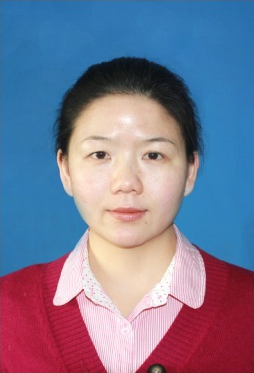
 Name:Binbinb Yu
Position:Associate Professor
Tel:+86-13511757593
Email:bbyu@mail.yzu.edu.cn
Introduction:
Binbin Yu, female, doctor, associate professor. Research direction: microbial ecology, heavy metal and antibiotic combined pollution remediation.
In terms of teaching, mainly teach many specialized courses such as 《Environmental Science》, 《Trace Elements and Health》, 《Advanced Agricultural Chemistry》 and so on. In terms of scientific research, he has presided over and completed one youth project of National Natural Science Foundation, one youth Project of Jiangsu Natural Science Foundation and one youth Fund project of Yangzhou City of Jiangsu Province. Presided over two open funds; Presided over 1 teaching reform project; has published more than 10 papers in academic journals at home and abroad.
Education:
B.S. 2002 Environmental Engineering, Hubei Agricultural College, Jingzhou, China
M.S. 2010 Ecology, Hangzhou Normal University, Hangzhou, China
Ph.D. 2014 Environmental Science, Nankai University, Tianjin, China
Achievements in scientific research:
Grants
(1)Microbial ecological effects of heavy metals and antibiotics combined contamination and their influences on nitrifying bacterial communities, National Natural Science Foundation of China (no.31500425), $35,000, PI.
(2)Microbial ecological effects of heavy metals and antibiotics combined contamination and their mechanisms on nitrifying bacterial communities, Jiangsu Provincial Natural Science Foundation of China (no.BK20150452), $30,000, PI.
(3)The research of remediation by flowers and biochar in heavy metal contaminated soil, Yangzhou Natural Science Foundation of Jiangsu Provincial, China (no.YZ2014053), $1,500, PI.
(4)The research of plant - biochar joint repair compound of antibiotics and heavy metals contaminated soil, Project of Zhejiang Provincial Key Laboratory of Plant Evolutionary Ecology and Conservation (no.EEC2014-02), $4,600, PI.
(5)The mechanism of soil nitrifying bacteria by irrigated livestock manure, Project of Key Laboratory of Original Agro-Environmental Pollution Prevention and Control, Ministry of Agriculture/Tianjin Key Laboratory of Agro-environment and Safe-product, $4,600, PI.
(6)The molecular ecological effect on soil nitrifying bacteria were applied to the organic fertilizer of poultry manure, Project of Key Laboratory of Pollution Processes and Environmental Criteria (Nankai University), Ministry of Education, China (no.KL-PPEC-2016-3), $3,000, PI.
Publications
(1) Kun Liu, Yuelong Qin, Yaseen Muhammad, Ying Zhu, Rui Tang, Ninghua Chen, Huazhen Shi , Hanbing Zhang, Zhangfa Tong,Binbin Yu. Effect of Fe3O4 content and microwave reaction time on the properties of Fe3O4/ZnO magnetic nanoparticles[J]. Journal of Alloys and Compounds,2019,781: 790-799.
(2)Lijuan Cheng, Qixing Zhou ,Binbin Yu. Responses and roles of roots, microbes, and degrading genes in rhizosphere during phytoremediation of petroleum hydrocarbons contaminated soil[J]. International Journal of Phytoremediation, 2019, 1549 – 7879.
(3)Zinc and oxytetracycline stress effects on maize germination and seedling antioxidant system, Jiangsu Journal of Agricultural Science, 2017, 33(1): 13 – 18. (in Chinese)
(4) Effect of roxithromycin (ROX) on soil nitrogen speciation and soil urease in the different growth stage of wheat, Asian Journal of Ecotoxicology, 2016, 11(6): 134 – 143. (in Chinese)
(5)Effects of copper and oxytetracycline combined exposure on the seedling development of maize, Journal of Environment and Health, 2016, 33(12): 1082 - 1085. (in Chinese)
(6)Reflections on teaching methods of “Environmental Science” course, Education Teaching Forum, 2016, 9(36): 184 – 185.
(7)Effects of roxithromycin on ammonia-oxidizing bacteria and nitrite-oxidizing bacteria in the rhizosphere of wheat, Applied Microbiology and Biotechnology, 2014, 98(1): 263-272.
(8)Human Health Risk Assessment Based on Toxicity Characteristic Leaching Procedure and Simple Bioaccessibility Extraction Test of Toxic Metals in Urban Street Dust of Tianjin, China, PLOS One, 2014, 9(3): e92459.
(9)Source, distribution, and health risk assessment of polycyclic aromatic hydrocarbons in urban street dust in Tianjin, China, Environmental Science and Pollution Research, 2014, 21(4): 2817-2825.
(10)Changes of the structure and diversity of bacterial communities during the progress of adaptation to organic wastewater, Canadian Journal of Microbiology, 2010, 56(4): 352-355.
(11)Isolation and characterization of aniline degradation slightly halophilic bacterium, Erwinia sp. Strain HSA6, Microbiological Research, 2010, 165(5): 418-426.
(12)Change of bacterial community structure acclimated by nitrobenzene-containing wastewater, Journal of Zhejiang University (Science Edition), 2010, 37(1):96 - 103.(in Chinese)
(13)Impacts of three different hypersaline aniline-containing waste water compositions on the bacterial community structure, Acta Ecologica Sinica, 2009, 29(11):6165 - 6173.
(14)The application of molecular biology technique in the study of microbial diversity of activated sludge, Jiangsu Agricultural Science, 2009, 5:313 - 315.
(15)Soil microbial biomass and enzyme activity of soils in different secondary succession stage of evergreen broad-leaved forest, Journal of Northwest Forestry University, 2008, 23(5):30 - 33.
(16)The optimization of RAPD amplification conditions of paddy soil microbial, Jiangsu Agricultural Science, 2007, 2:200 – 202.
 苏公网安备 32100302010246号